Four decades ago, long before most of the world had even heard the words "web" or "internet," Israel had already secured its place in digital history. With the receipt of the domain suffix IL, Israel became the third country in the world to receive an official foothold in cyberspace - immediately after the US and the UK. Now, 40 years later, "Globes" revisits the people behind that defining moment - the folks who saw the future, brought the Internet to Israel, fought to implement it, opened the market to competition, and laid the foundation for what would later make Israel the Startup Nation.
He connected the first Israeli university to the net
"Email is like a drug. The moment I brought it to Israel in 1982, I lit the spark, which lit the fire that is still burning to this day," recalls Prof. Shmuel Peleg about the Internet's entry into Israel. "A minute-long call from Israel to the US cost as much as a monthly salary, so this was a significant change. Today, if they would take away your email or WhatsApp, you'd feel hobbled."

Prof. Shmuel Peleg credit: Shlomi Yosef
At the time, Peleg was still in the midst of his doctorate in computer science at the University of Maryland. There, he discovered the ability to connect to the world via email. "To send something, I had to dial-up another email [server] and it would connect to the email I wanted. The connections would happen once an hour, so it could be a few hours before it arrived."
After returning to Israel, Peleg felt cut off from the world of scientific research. "I wanted to reconnect," he says, downplaying his personal motivation. "I’d gotten used to relatively immediate answers, transferring information quickly and receiving research results, instead of waiting a month for things to arrive in the regular mail."
On a visit to Maryland in the summer of 1982, he decided to take action. Peleg and his thesis advisor Prof. Azriel Rosenfeld, a pioneer in image processing, set a fixed time of the week when they would both be connected to a computer. Once back in Israel, Peleg and his colleagues in Israel compiled emails that were sent to Rosenfeld at the prescribed time, and in Maryland, they did the same in the opposite direction.
Rosenfeld would dial and would also pay the bill. "Imagine it like a fax. It was very expensive," Peleg says. A few months later, Peleg persuaded the Hebrew University of Jerusalem to pay the cost, making it possible, for the first time, to send and receive emails from the US to an academic institution in Israel.
At that same time, US academics had established the CSNET network to connect computer science faculties between universities. In 1984, Israel became the first country outside the US to connect to this network.
"No one here knew what email was, but payment had already to be arranged because of barriers to entry and subscription fees. I spoke to government officials, who knew nothing. I turned to the person who was the first Minister of Science, Prof. Yuval Ne'eman. Luckily, one of the people in his office came from the Foreign Ministry, where they had heard about these networks, and that helped. That’s how we managed to convince the minister to support the move.
"The funding came within a month, and to make sure they wouldn't cut it in the future, we convinced him to sign a contract directly with CSNET, because canceling an international contract is harder."
But then another obstacle arose: in order to communicate, an address was also required. "The control center at ARPANET - the precursor to the Internet - asked us, ‘How many computers do you expect to have in Israel in the next five years?’ This question was for the purpose of assigning addresses to computers, because each computer has to have a different address.
"At the time, we had two computers at our university in Jerusalem, and maybe ten more in the rest of the country. So, we stretched the truth and said that in five years there would be 400 computers in Israel. They laughed at us. In fact, we received 64,000 addresses. I took a bold approach with the professor from Maryland and look what’s happened since."
Today, Peleg stands in awe of the impact. "No one at the time could understand that the Internet would reach such dimensions. I just wanted to connect to the world I was disconnected from. But to say that I thought it would have uses other than research? No way."
Streamlined infrastructure setup and cut surfing costs by 90%
Prof. Danny Dolev encountered the Internet for the first time at IBM's research labs. That was in 1979, when he completed his postdoctoral fellowship in computer science at Stanford University. "The entire Internet project began in the military as an alternative system in case of an extreme nuclear event. They wanted to set up a decentralized communications network that could operate even in the event of an attack, so that the remaining parts of the network could continue to communicate.

Prof. Danny Dolev credit: Shlomi Yosef
"The universities received research grants to develop the idea, and Stanford and Berkeley were among the first in the US, out of the 16 connected nodes."
When Dolev returned to Israel in 1982, he found it hard to manage without Internet. "I came back to a world that was backwards. To exchange ideas with other researchers, I had to travel to conferences. Phone calls cost a fortune at the time, and the Internet was an alternative way to transfer information."
Initially, Dolev dialed-up once or twice a day to receive emails from the US. At a certain point, together with Peleg, he formed a group that brought the Internet to Israel’s universities.
At the time, Dolev also served as chairman of the Inter-University Computation Center. "As head of IUCC, I was responsible for coordinating and overseeing the entire infrastructure project - determining how each university would build its part and how all the connections would be integrated. Everyone was eager to cooperate, and I handled the practical details: who would fund what and who would be responsible for each task. We were the first country outside the US to establish such an infrastructure."
At a certain point, the group needed to find main funding sources, which was exactly Dolev's job. "The orchestra needed a conductor." Funding came from the Ministry of Science, Israel’s universities, and the EU.
However, the Internet became accessible to the public only in the mid-1990s. "In Switzerland, they developed a preliminary browser for research purposes that helped people who didn’t know how to write a line of code to find and read information."
To make the Internet was accessible in Israel as well, the architects of the Internet in Israel found themselves in a struggle against telecom corporation Bezeq. "The question was how to open up Internet access without allowing Bezeq to take control. If we had handed internet services over to them, they would have become a monopoly in the Internet market, and no one would have stood a chance of competing. That required establishing a central hub in Israel through which all traffic would be routed."
Then Netvision came along. "It became Israel’s largest internet service provider, and we reached the point where internet traffic began to grow rapidly. Any company that wanted to provide service had to lease international lines from Bezeq, which at the time was the infrastructure provider."
"The Israel Internet Association and IUCC understood that they had to deal with this, and the proposal was made [instead of using international lines] to establish an address interchange inside Israel that would use local infrastructure. That’s how we prevented Netvision from becoming an almost monopoly in internet service providing."
According to him, there was never any question about establishing the exchange point itself; the real issue was the initiative to require all service providers to use it. Dolev was the one who persuaded the Ministry of Communications to impose that requirement.
Even so, prices remained high, largely because of the enormous fees Bezeq charged for lines. "We wanted to introduce satellite communications, so that data would go out through Bezeq’s lines but return via satellites, whose costs were significantly lower. The IUCC was conceptually involved in the initiative - we proved that it was feasible and worked with various government ministries to advance it. That broke Bezeq’s monopoly. Prices dropped phenomenally by 90% within just a few months."
Today, he looks on with wonder at the trajectory of the invention he met more than 40 years ago. "Today it's on everyone's cellphone. Today's phone is 100 times more powerful than the computer that landed a man on the moon. No one thought it would happen.
"Just as we succeeded in rolling out the Internet widely within a relatively short time, AI is another transformative technology, for better and for worse. It helps us and is an integral part of our lives, but its power will also bring factors to influence us in a way that we do not understand and cannot object to. The pace of change is so great that there's no way that any regulation can control this monster."
Mobilized the Communications Ministry, hooked up academia and brought the IDF online
Hank Nussbacher’s story also begins in the US, while studying for a BA degree in statics and computer science at Baruch College in New York. "After graduating, I worked setting up a communication network between 19 colleges and universities. I connected dozens of institutions, such as Yale and Stanford, to the network which belonged to City University. It was a forerunner of the Internet."

Hank Nussbacher credit: Shlomi Yosef
When Nussbacher refers to a network, he means a system of interconnected lines that enables the transfer of files, SMS messages, and emails. At that time, no such network existed in Israel, and he then took on the task of helping to build it. "I was a visiting scientist at the Weizmann Institute at the time, and I really missed the ability to communicate between people. So, when the universities were looking for someone who could help them set up a communications network, I went for it."
At first, he served as an external consultant to the IUCC and later connected Israel’s institutions of higher education (there were seven at the time). "This was the place where the Israeli Internet was born." In the next stage, other entities were connected, such as Israel Electric Corp.
The biggest challenge Nussbacher encountered along the way was the war with Bezeq. "They didn't cooperate. Otherwise, the Internet would have come two years earlier. Bezeq had another network which charged for every bit that passed through it, and we proposed a solution that bypassed it. The Ministry of Communications was on our side, but it was weak, and it really was a struggle. In the end, we won, and it was born in academia."
Nussbacher didn't stop. He went on to advise personnel at the IDF Center of Computing and Information Systems (MAMRAM) and helped establish the IDF Internet. Together they founded the domain that still exists today: IDF.IL.
He looks at what is happening on the Internet today with wonder and disappointment. "I didn't expect things like Amazon or Netflix to happen. That wasn't my vision. However, I am disappointed that the internet has become a tool for corruption. Every pervert in the world can get close to another pervert. It's not necessarily about sex; it can also be misinformation or antisemitism. Today they have power, and that's because of the Internet."
She founded the first internet provider in Israel
In 1980, Ruth Alon moved to Silicon Valley to work in computer science. At the time, she was married to Zvi Alon, who in 1990 founded NetManage, one of the world’s first software companies to develop products supporting data networks and e-mail. After a few years, they returned to Israel, "Before the children got too big."

Ruth Alon credit: Shaked Shapira
In 1994, Alon opened a branch of NetManage in Haifa, while at the same time Israel began to obtain licenses for Internet connections. Netvision was established as a subsidiary of NetManage, and Ruth Alon was named its CEO and president. "A great deal of our motivation was to connect the Israeli branch to our branches in the US. That's why we did two things: we connected Israelis to the Internet through modems and provided the software (Chameleon) for this connection, meaning the computer protocol that enables a connection to the Internet."
But the beginning was fraught with challenges. Users did not have to buy the software, and there were free options on the Internet such as Netscape. Chameleon was one of the most expensive products on the market, which deterred users. The company’s main source of income was the network connection. Netvision initially consisted of only three people, and Alon was entrusted with the technical side.
And then came the breakthrough, precisely because Netvision had a competitor: Elronet, a subsidiary of Elron, which was owned by her father Uzia Galil. "After arguing every Friday night with my father about business, in the end the companies merged and became the leading company in the sector."
At the time, Alon didn't comprehend the magnitude of the change. "I had an amazing team that had industry know-how. We realized that we were in the heart of a revolution, but today I admit that we didn't understand its scale."
Alon, who holds a bachelor's degree in computer science, was a pioneer not only for the Internet. In 1975, later in her studies, she says, "I wanted to do a master's degree in AI, I was fired up about Asimov and robots, and everything that happens to AI but there was no one to guide me on the subject, so I studied for a master's degree in industrial engineering and management."
Created the world's tenth website to go live
David Rashty has a special place in the Israeli Internet community. In 1992, he founded one of the first websites in Israel, which was the tenth in the world to go live and the first to appear in two languages. "It was the Hebrew University website. At first, it just had information, but little by little we built additional applications such as a bulletin board and information about Egged bus lines. Every month I would go to Egged, get a film showing the relevant bus schedules and enter them into the system."

David Rashty credit: Shaked Shapira
In 1993, Rashty built another website, Holit, on the topic of the environment, and a year later, created the popular website Snunit, that made information accessible to schools. The site exists to this day and laid the foundation for remote learning.
Rashty, who holds a bachelor's degree in computer science and a master's degree in science teaching, was also in charge of writing the code, developing, and creating, processing, and uploading the content to the site. "It stemmed a lot from intuition."
One of the defining moments that Rashty recalls was the struggle surrounding the technological challenge of displaying Hebrew, which is written from right to left, unlike the Latin-based languages used in computing. The debate centered on two standards: the visual standard, in which the text is stored according to the way it appeared on the screen; and the logical standard, in which the text is stored according to the natural reading order of the language and displayed from right to left.
"We had to go against the grain," he says. "We advanced the visual standard and developed fonts and tools so that Hebrew would work properly anywhere on the web. In the end, Microsoft adopted our standard as well and we prevailed."
He wrote the standard for reading emails in Hebrew
Yehavi Bourvine had worked for more than 20 years in computing, communications, servers, and telephone infrastructures. He received his BA and MA degrees in computer science from the Hebrew University of Jerusalem, where he was also limited to writing emails in English only.
"In the early days of the Internet, everyone wrote in English, and the question arose how we would display Hebrew from the other side, from left to right or vice versa," Bourvine recalls. " "This was actually a protocol that defined how the message should appear, so that everyone would write in the same language and also read in the same language."

Yehavi Bourvine credit: Shlomi Yosef
To overcome the challenge, he took part in a committee at the Standards Institution of Israel on Hebrew standards in computerization. "I wrote the standard - how one side tells the other how Hebrew should be displayed. Is it through encoding? Is it handled elsewhere? How do you decode the language and also display it properly?"
Even then, he understood this was a significant event. "I realized that someone had to do it and it would be me," he says, recalling the battle against Microsoft, which eventually came to use the Hebrew standard he created. "They wanted the Internet not just to be used by academia, but to belong to everyone," he said.
Today, in retrospect, he is amazed by the transformation. "The Internet has advanced by generations. In the past, browsers were simple, and some were text-only. Today, everything is displayed through sophisticated interfaces with beautiful user experiences."
Founded the Israel Internet Association and brought the Jewish Agency online
Dov Winer was a psychologist when he first encountered the Internet. He immigrated to Israel from Brazil in 1966 and joined Kibbutz Bror Hayil. Working at the Sha'ar Hanegev community service, he received a major grant to fund a leadership development project and also received funding from the Bernard van Leer Foundation to promote a program aimed at providing workers in regional factories with knowledge that would improve early childhood education. As a result, he was invited to attend a course in The Hague, Netherlands, where one of the days was devoted entirely to the subject of accessing knowledge through online databases.

Dov Winer credit: Shaked Shapira
Enthusiastic about the possibilities he had discovered, he established the Applied Research Unit at the Negev College and focused his interest on using the Internet. "This was an intermediate stage in Israel. The Internet already existed as a research tool in universities and the Ministry of Communications, and they wanted to open it up to industry. There was a joint committee, and my job was to implement the Internet within enterprises. At the time, it meant explaining to computer industry and software companies that they should go online, because that way they could download software. The Israeli Internet Association later grew out of this group."
Winer held seminars explaining how to use the Internet and the benefits being able to access information. In addition, he established a local branch of ISOC, the global organization whose goal is to make the Internet accessible to the general public. "As the Internet moved from academia and the military to something open and public, there needed to be an organizational framework to manage it. That’s why the association was founded, and I joined."
One of the things Winer wanted to establish was a global Jewish network. "I wanted all the Jews in the world to be able to be in contact with each other; cultural institutions, education and more. I received approval from the Knesset Finance Committee, and we were awarded funding for planning, but not for construction."
He also connected the Jewish Agency for Israel to the network. "In 1998, I established the Virtual Zionist Congress, where a resolution was adopted on Jewish electronic citizenship, along with a decision to involve Jews around the world in decision-making processes concerning the Jewish people."
Hacked into Adam Baruch's computer and brought the Internet into the mainstream
Even as a high schooler in 1970, Neora Shem-Shaul was sneaking into IBM courses. "I was a kibbutznik from Nahal Oz and went to the university in Beersheva to learn about the computer there," - the first to arrive in Israel.
In the early 1990s, she was working at Digital Equipment Systems (DEC), which manufactured computers, servers and software, the second largest company after IBM. "I connected to the Internet there and realized that there was something crazy going on. But the others didn't understand what I was talking about. They thought I was cuckoo."
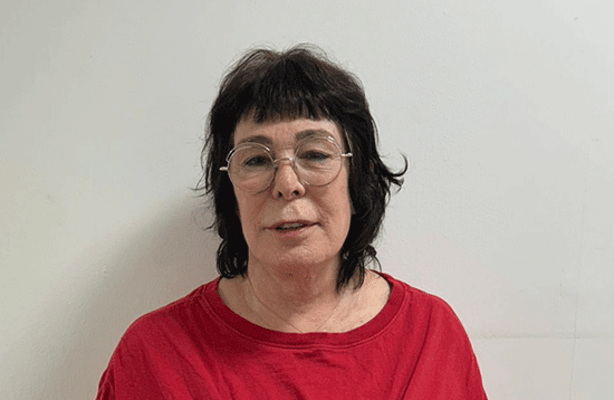
Neora Shem-Shaul credit: Shaked Shapira
Neora did not give up. In 1993 she published the first Hebrew cyberpunk book, "Digital Novel," which was also distributed on diskette. The plot took place inside the Internet, and the main character was a hacker. This was the beginning of Israeli popular culture engagement on the Internet.
She then became the founder and editor of computer magazine "Zombit" and was one of the first in Israel to write and teach about online culture. At one point, she also had a regular column in "Globes" called "Eshet Reshet" (Network Woman), which dealt with the Internet from an economic angle. "I'm not a finance person," she says. "These were columns about interesting things that had happened, about US companies like Oracle who threw parties when they made announcements related to the Internet."
When she wanted to start writing for newspaper "Iton Shishi," she did something out of the ordinary. "I hacked into the computer of Adam Baruch, the legendary editor. After I’d proved to him that was possible, I offered him a regular column on computer crime. He agreed."
When Neora looks at things today, she's not happy. "I was an idealist. I believed that the Internet would cross borders and create gender equality. Today, I eat my hat. A lot of evil came out of it, the opposite of what they used to say at Google. So, I stopped working with technology and switched to spiritual guidance."
These days, the Israel Internet Association is establishing a hall of fame honoring the individuals behind Israel’s Internet revolution. As part of the initiative, the interviewees featured in the article will receive a certificate of recognition at a special conference celebrating 40 Years to the Israeli Internet, to be held on June 3 at the Israel National Library
Published by Globes, Israel business news - en.globes.co.il - on May 31, 2026.
© Copyright of Globes Publisher Itonut (1983) Ltd., 2026. .