Sponsored content by Tel-Hai University of Kiryat Shmona in the Galilee
In most academic institutions, artificial intelligence has been introduced into the curriculum in recent years as an additional course, a specialization track, or a tool used by faculty and students. Tel-Hai University of Kiryat Shmona in the Galilee is taking a different approach: its new Cluster (Faculty) of Engineering and Advanced Computing was designed from the outset as an AI-native academic framework, with AI embedded at its core rather than added as another component.
"Just as modern industries are now being built as AI-native organizations, we are building a new faculty from the ground up," says Prof. Ethan Hadar, Founding Dean of the Cluster of Engineering and Advanced Computing at Tel-Hai University. "Its foundations are based on integrating the physical, digital, and human worlds."
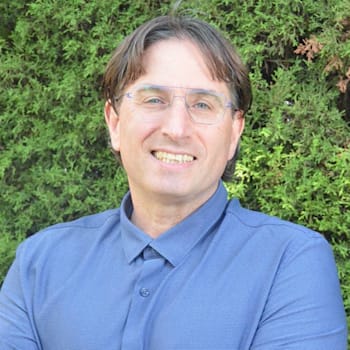
Prof. Ethan Hadar, Founding Dean of the Cluster of Engineering and Advanced Computing at Tel-Hai University of Kiryat Shmona in the Galilee / Photo: Tel-Hai University of Kiryat Shmona in the Galilee
From Robotics to Digital Twins: Inside Tel-Hai University's New AI Ecosystem
One of the faculty's flagship initiatives is the new Artificial Intelligence Systems Engineering Program, scheduled to launch in the coming academic year. Designed to go beyond traditional engineering education, it integrates AI across the entire engineering lifecycle, reflecting the university's broader vision for an AI-native faculty.
Fields such as mechatronics and robotics now require a fundamentally different skill set than they did a decade ago. In today's era of Physical AI, control, sensing, and automation systems are significantly enhanced through AI integration across every system component - from sensors to drones and autonomous robots. AI is already optimizing manufacturing lines, logistics operations, retail networks, and the development of intelligent products.
The same transformation is taking place in precision agriculture, where AI is improving productivity, reducing costs, and enhancing quality across farming operations - from autonomous tractors and field equipment to orchards, greenhouses, dairy farms, and livestock facilities. AI is rapidly becoming a cross-disciplinary engineering capability.
Turning AI Innovation into Real-World Impact
Alongside its academic programs, the faculty is establishing five research centers dedicated to Physical AI - the application of artificial intelligence in real-world environments. Two have already been launched: a Center for Autonomous Vehicles and Robotics, and a Center for Digital Twins.
Another center will focus on Human-AI Teaming - the collaboration between people and AI systems - a field with growing relevance in healthcare, defense industries, transportation, and business organizations.
From Healthcare to Mars Missions: A Multidisciplinary Research Vision
The breadth of ongoing research reflects the faculty's multidisciplinary vision. Projects range from developing circular-economy food systems for future Mars missions to AI-based battery energy management for data centers, digital twins for orchards, AI tools for identifying stress indicators associated with diabetes, and AI-powered solutions that support caregivers of people living with dementia.
Despite their diversity, these projects share a common approach: harnessing artificial intelligence to solve real-world challenges, accelerate innovation, support decision-making, and generate meaningful value for both society and industry.
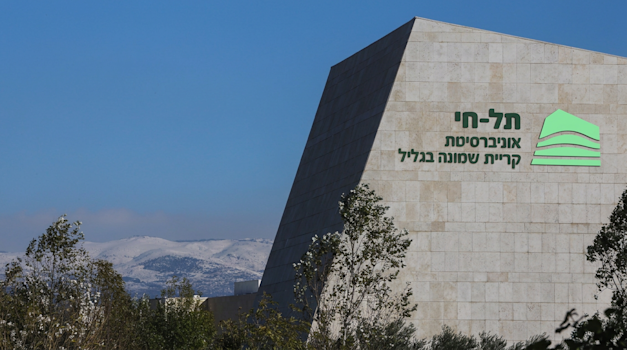
Tel-Hai University of Kiryat Shmona in the Galilee / Photo: Tel-Hai University of Kiryat Shmona in the Galilee
"Human oversight will always remain essential"
According to Prof. Hadar, Tel-Hai University's vision is "not to replace human judgment - quite the opposite. Without a solid understanding of the fundamentals, AI can produce unintended outcomes, which is why human oversight will always remain essential."
He adds that "AI enables researchers to accelerate the technical processes that support research, shorten the journey from concept to prototype, and streamline administrative processes. But we must never lose innovation, human creativity, critical thinking, oversight, or sound judgment along the way. Humans must identify the problem, define the objective, verify that the outcome is correct, and ultimately remain responsible for the results."
Preparing engineers for a rapidly evolving technological landscape requires more than teaching the latest tools. According to Prof. Hadar, Tel-Hai offers an adaptive curriculum that combines enduring engineering fundamentals with continuously updated technologies, case studies, and learning materials. "The AI landscape is evolving constantly, and we need to evolve with it - not merely respond to it," he says.
Modern systems are designed to "evolve, with flexibility, resilience, and robustness serving as fundamental requirements," Prof. Hadar says. "In the AI era, where technologies change rapidly, continuous optimization and adaptation are essential throughout the entire lifecycle - from concept and design through development, deployment, maintenance, and ongoing business operations. Organizations must preserve their AI investments in products, processes, and systems while continuing to improve as technologies, business goals, and market conditions evolve."
He adds: "Engineers must also know how to measure quality, monitor performance, and continuously improve systems according to the goals that we, as humans, define."
Training the Next Generation of Engineers, Innovators, and Scientific Leaders
Reflecting its interdisciplinary vision for addressing the complex challenges of the 21st century, Tel-Hai University views the Engineering Cluster as an integrated framework of diverse engineering disciplines, spanning fields from computer engineering to AI systems engineering.
Alongside mathematics, physics, data science, and AI-enabled programming, Prof. Hadar places great emphasis on interpersonal skills, including teamwork, negotiation, and the ability to operate effectively within complex multidisciplinary environments.
"Engineers are the builders of the world," he says. "Scientists help us understand the world; engineers build it. We are problem-solvers, and we solve problems in diverse teams, across different areas of expertise, while working within real industrial constraints."
Positioning the Galilee as a Global Hub for Innovation
The establishment of the new Engineering Cluster also reflects a broader regional mission. Prof. Hadar, who grew up in the Galilee, sees engineering education as a catalyst for strengthening northern Israel.
"My grandparents contributed through agriculture, construction, and foundational industry," he says. "I hope to contribute through science and education, and to create a significant center of knowledge and innovation here in the Galilee - one that is deeply connected to industry and creates real opportunities for the region."
Tel-Hai University of Kiryat Shmona in the Galilee is a rapidly growing research university addressing challenges in food security, sustainable agriculture, engineering, artificial intelligence (AI), and more. Through interdisciplinary applied research, academic excellence in a host of disciplines - including humanities, social sciences, and education - as well as close collaboration with industry and communities, Tel-Hai University of Kiryat Shmona in the Galilee is tackling some of the most pressing challenges of the 21st century, while positioning the Galilee as a global hub for innovation.
Sponsored content by Tel-Hai University of Kiryat Shmona in the Galilee