Sponsored content by Keshet Donor Advised Fund
2025 has been an exceptional year for Israel’s high tech sector.
According to data from the Israel Innovation Authority, it is expected to be a record year for exits, primarily driven by Google’s acquisition of Wiz for USD 32 billion, the largest deal in Israeli tech history, CyberArk’s sale to Palo Alto for USD 25 billion, Run AI’s acquisition by Nvidia for USD 700 million, and dozens of additional transactions.
Already in 2024, a record annual exit volume of USD 13.4 billion was recorded, representing a 78 percent increase compared to the previous year. This capital is now flowing into the hands of hundreds of entrepreneurs, investors and employees who held stock options. Many of them find themselves, for the first time in their lives, managing significant sums that require thoughtful decisions.
Yet one topic almost always remains outside the immediate agenda: giving.
"It’s an interesting paradox," says Maya Natan Mozer, Founder and CEO of Keshet, a donor advised fund focused on managing philanthropic capital for high net worth individuals and family offices. "Precisely during career moments of high liquidity such as an exit, an IPO or the sale of a company these are the years when donating is most advantageous from a tax planning perspective. But at that exact moment, people are naturally extremely busy. They are not ready to decide where the money should go. Then, when they finally are ready, their income level is already lower and the tax advantage is significantly reduced."
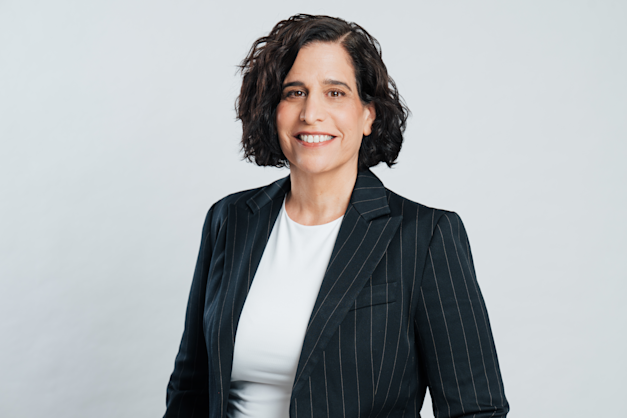
Maya Natan, Founder and CEO of Keshet Donor Advised Fund / Photo: Tami Bar-Shai
Founded five years ago as a public benefit company, Keshet is Israel’s first fund of its kind. It enables donors to deposit tax eligible contributions and manages philanthropic capital in a professional and flexible manner from the moment of deposit until its allocation to social causes, while preserving the potential to grow the capital over time and taking tax considerations into account.
The concept is simple. A donor deposits assets into a personal philanthropic fund after opening an account at Keshet and immediately receives a tax receipt for the full amount, in accordance with Section 46 of the Israeli Income Tax Ordinance. Keshet emphasizes that it does not provide tax advisory services and that each donor must consult their own CPA or attorney.
Philanthropic capital deposited with Keshet is managed through a diversified allocation that includes conservative capital market investments alongside cash and deposits, enabling both long term growth and full liquidity for immediate grantmaking. Returns accrued in the account, which are tax exempt, are added to the philanthropic capital and increase future giving potential. At any point, donors may recommend where and when grants should be allocated, at a pace that suits them and without pressure. Access to the account is provided through a digital portal that displays balances, investment performance and allows donors to choose whether to grant in their own name or anonymously.
"We allow people to separate two completely different moments," Natan explains. "The tax moment, when it makes sense to donate from a tax planning perspective, and the philanthropic moment, deciding to whom and for what purpose to give. You don’t have to donate ten million shekels, the annual tax eligible ceiling, to a single nonprofit all at once. You place the funds in the foundation and recommend their allocation over time. Decisions are made gradually, thoughtfully and strategically."
According to Natan, Keshet’s donors are primarily post exit entrepreneurs, senior executives, controlling shareholders and intergenerational wealth families. "They all view giving as part of an overall wealth management strategy rather than a one off action," she says.
Civil society as critical infrastructure
On October 7, 2023, while the country stood frozen for long hours, it was nonprofit organizations that were there on the ground. They evacuated families, distributed equipment, established emergency housing, provided psychological support and supported soldiers in the field. Israeli civil society demonstrated a level of resilience few anticipated. Keshet was part of this effort. In the months following the attack, unprecedented volumes of grants flowed through the fund to nonprofits operating in the field, from victim assistance organizations to those supporting displaced communities.
But the deeper truth is that this holds true in routine times as well. Mental health, elder care, education in the periphery, human rights, environmental protection and culture all exist largely thanks to the third sector. Anyone who wants to live in a functioning country must understand that nonprofits are a vital social infrastructure.
This is precisely why the fund exists. According to Keshet data, more than NIS 1.2 billion has been deposited to date, and over 175 families have chosen to manage their philanthropic capital through the fund. Grants have already been distributed to more than 1,100 nonprofits across Israel.
The American giving model comes to Israel
Keshet, as implied by its name, is a donor advised fund, known in the United States as a DAF. While Keshet is a pioneer in Israel, in the US this is arguably the fastest growing philanthropic vehicle. According to the annual report of the National Philanthropic Trust, assets held in DAFs in the US reached USD 251 billion, with the number of accounts growing at an annual rate of over 23 percent in the past decade.
In 2023 alone, approximately USD 55 billion in grants flowed from DAFs to social organizations, nearly half of all grants distributed by private foundations, despite DAF assets accounting for less than one fifth of total private foundation assets.
In Israel, donations from abroad account for more than half of all funding received by social organizations. Giving by Israelis as a percentage of income is significantly lower than in other Western countries, despite Israel being one of the world’s most developed economies. This is partly because Israeli wealth holders are typically first generation wealth creators. In the United States, by contrast, most major donors are old money, second or third generation families who grew up with wealth and therefore feel greater security and a stronger responsibility to give back.
Until recently, Israel also lacked the appropriate mechanisms for large scale philanthropy. "In the US there is a well developed philanthropic infrastructure that simplifies the giving process," Natan explains. "In Israel, legislation has only begun to truly enable this in recent years."
Tax credits and stock donations: the hidden power of donor advised funds
Beyond altruistic motivations, toward the end of the year philanthropy becomes part of personal, family and business financial planning. Donations are eligible for a 35 percent tax credit annually, up to a ceiling of NIS 10 million. The ability to allocate donations within a specific fiscal year while deciding later where and when funds will be granted is central to Keshet’s financial value proposition.
But what truly differentiates smart giving from regular giving is not only timing, but the type of asset. "Most nonprofits in Israel can only accept cash," Natan says. "But people don’t hold their wealth in cash. They hold stocks, options, real estate, art, secondary shares. When they want to donate, they first sell the asset, pay capital gains tax, and only then donate what remains. That is an enormous waste of philanthropic potential."
"At year end, people sit with their CPA and ask how to use assets to optimize tax benefits," she continues. "In many cases, when donation is discussed as a tax credit strategy, capital gains tax is overlooked. Had they donated shares instead of cash, they could avoid capital gains tax altogether and still receive a 35 percent tax credit. It’s good for the donor, good for Israeli society and good for the state, because the money goes to social causes instead of being lost to friction."
She offers an example. Suppose you hold shares worth NIS 1 million that were originally purchased for NIS 200,000, generating a gain of NIS 800,000. In the first scenario, you sell the shares, pay 25 percent capital gains tax on the gain, NIS 200,000, and are left with NIS 800,000 to donate. At year end you receive a 35 percent tax credit on NIS 800,000, amounting to NIS 280,000. In the second scenario, you donate the shares directly to the fund. No capital gains tax is triggered. The full NIS 1 million becomes a donation, generating a tax credit of NIS 350,000.
The donor gives and the capital is managed
A donor who has realized gains but delays donating not only forgoes tax benefits but also risks erosion of value. At Keshet, capital is invested in the capital markets between deposit and grant distribution.
"We manage the money conservatively," Natan explains. "The goal is not to generate high returns. In any case, the funds cannot be withdrawn because they are designated for philanthropy. The objective is capital preservation and reasonable growth. Last year, for example, we achieved an 8.5 percent return, which is tax exempt. Of course, there is no guarantee of returns and past performance is not indicative of future results. This is not an investment product but a philanthropic tool. Funds are managed according to an approved investment policy."
Those wishing to make significant donations in Israel face several options: donating directly to nonprofits, establishing a private foundation or using a donor advised fund. Each path has costs. Direct donations are simple but require donors to conduct their own due diligence, track funds and manage tax receipts. Private foundations offer full control but involve high costs, heavy bureaucracy and dedicated staffing. Keshet offers the best of both worlds. It provides institutional level governance including a public board of directors, an independent investment committee and internal audits without requiring donors to manage anything themselves.
Transparency is complete through a personal digital portal displaying balances, returns and grant history in real time. Administration is simplified with a single annual tax receipt instead of dozens from multiple nonprofits, one interface instead of countless communications. Most importantly, the model is designed for the long term. Donors can add funds over time, designate successors to continue their philanthropy and build a multigenerational philanthropic legacy.
"In addition, our operating fees are low for several reasons," Natan notes. "All our committees are staffed by volunteers, and our clients benefit from economies of scale in management fees and custodial costs. This ensures that philanthropic capital is not eroded."
Before any grant is distributed, Keshet conducts comprehensive due diligence. "We vet the nonprofit, execute agreements and monitor performance," Natan says. "The donor simply enjoys the giving. They determine their level of involvement, from anonymous giving to deep engagement. We support all models."
How much do I give back to society
"We have a social responsibility to cultivate a culture of giving in Israel," Natan concludes. "We believe it is both possible and desirable to begin giving at any age and at any level, without waiting. Philanthropy does not replace the state. It serves a complementary role. It touches every area of life: health, elder care, culture, the environment, human rights and more.
"Everyone should look at the full picture of their financial actions and ask: how much am I giving back to society? Especially after October 7, we all understand why this matters. We saw how civil society, nonprofits and social organizations held our lives together in both routine and emergency times."
For more information about Keshet Donor Advised Fund and to get in touch, click here.
Sponsored content by Keshet Donor Advised Fund